Methuen

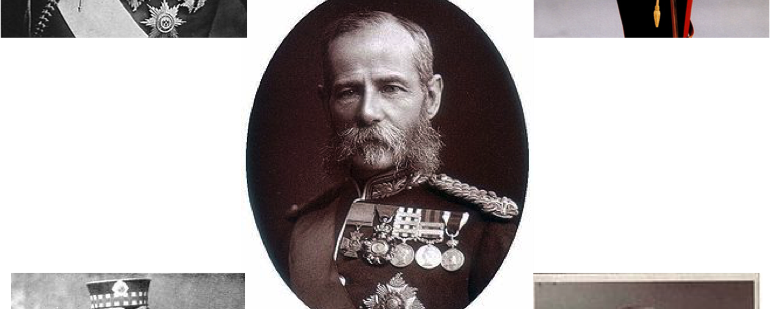
Field Marshal Paul Sanford Methuen, 3rdBaron Methuen is another of the quintet of Field Marshals to be associated with the Old Wellingtonian Lodge.

After Eton and two years in the Royal Wiltshire Yeomanry, Methuen joined the Scots Fusilier Guards (later renamed the Scots Guards) in 1864.

He saw active service with a number of his future Lodge brethren: at Amoaful in the Second Anglo-Asante War of 1873–4 on the staff of Sir Garnet Wolseley, a fellow Governor and Honorary Member of the Lodge. Promoted Brevet Colonel he was commandant at headquarters in Egypt for three months in 1882, being present at the battle of Teb el Kebir, with Dalgety and Connaught. Methuen served in Sir Charles Warren’s Bechuanaland expedition in 1884, where he commanded Methuen’s Horse, a corps of mounted rifles raised for the expedition, and obtained his first experience of South Africa and the Boers. He was bitterly disappointed when Wolseley did not select him for the Gordon relief expedition. In 1897 he went privately as an observer to the Tirah campaign, with John Forster, one of the Lodge Founders, and he served as press censor at its headquarters.

According to Miller he was favoured by the Queen and Prince of Wales, and he trod a middle path in the Army. He was a member of neither Wolseley’s nor Roberts’ factions, working with both and “preferred the company of other aristocratic officers.”[1] That all three would be Governors of College and members of the Lodge paints an interesting picture of College’s and the Lodge’s status in these years.

It was in South Africa, promoted Lieutenant General, that he was given command in equivocal circumstances, with neither Wolseley nor Lansdowne thinking him capable of “an almost independent command”.[2] His poor handling of troops, first the Naval Brigade at Graspan and then the Highland Brigade at Magersfontein, earned him strong criticism. Censure was avoided by Buller’s refusal to make him the scapegoat and Roberts took him into his command and under him Methuen was restored to some measure of success. 

Again in independent command in 1902, his column was attacked by De la Rey’s commando. Methuen, wounded in the thigh, was forced to surrender and the defeat ranked as the heaviest the British had suffered, and he was the only British general captured by the Boers, sealing an unenviable record in the campaign.

Methuen was appointed Colonel of the Scots Guards in May 1904 in succession to the Dule of Connaught & Strathearn, an appointment that gave him great pleasure and one that would be held by the present Duke of Kent. Methuen was promoted General the same month and in June received command of the Fourth Army Corps. He put into practice the lessons of South Africa, advocating mounted infantry in preference to cavalry, and emphasising accurate rifle fire. As a trainer and administrator he contributed to the high standards of the British Expeditionary Force in 1914.

In April 1908 Methuen was appointed General Officer Commanding-in-Chief in South Africa, Governor, Commander-in-Chief of Natal in 1910, and was promoted Field Marshal in June 1911. Methuen became Governor and Commander-in-Chief of Malta in 1915, and Constable of the Tower, an office previously held by Wellington. In late life he continued to dedicate himself to the Household brigade, and died in 1932 at Corsham Court.


[1]S. M. Miller, Lord Methuen and the British army: failure and redemption in South Africa(1999)

[2]J. Gooch, ed., The Boer War: direction, experience and image(2000) ·

Wolseley

Viscount Wolseley

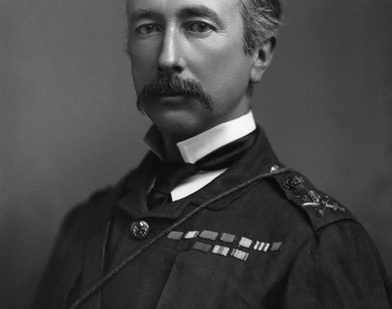
Sir Garnet Joseph Wolseley, 1st Viscount Wolseley is one of five Field Marshals to condescend to be associated with the Old Wellingtonian Lodge. He was Gilbert & Sullivan’s Modern Major General, and his efficiency was the inspiration for the late 19th century English phrase “everything’s all Sir Garnet”.

Like Lord Roberts, Wolseley was a professional soldier, a very much a self-made man, and quite the opposite of Lord Methuen. He was born into a family with little money and unable to afford a commission his mother sought a nomination on the strength of his father’s service from the Commander-in-Chief, appropriately enough the Duke of Wellington. His mother’s direct appeal was successful, and he was nominated to an ensigncy in the 12th Foot (later the Suffolks) in 1852. He would later write that that the first business of the young officer who wished to distinguish himself in his profession was to seek to get killed, the only means by which he could hope to advance while the system of purchase prevailed.

Wolseley transferred to the 80thin order to see active service in the Second Anglo-Burmese War. Within a few months of his arrival he distinguished himself in an assault on Myat Toon’s stockade at Kyault Azein in 1853, and was so badly wounded in the left thigh that would trouble him for the remainder of his life. He saw service in the Crimea, where he met Charles George Gordon in the trenches before Sevastopol, who would become one of his heroes; in turn Wolseley would become one of only two men for whom Gordon prayed nightly. Wolseley was slightly wounded, this time in the right thigh during one attack on the Quarries in June 1855, but on 30 August he was severely wounded by shellfire, suffering another wound to the right leg and losing the sight of his left eye.

Wolseley was diverted from a posting to China by the Mutiny, and he was part of the first relief of Lucknow, and later succeeded his future rival, Roberts. He fought in Oudh and in the Second Opium War with Hope Grant, his first patron. In less than eight years Wolseley had risen, without purchase, from ensign to brevet lieutenant-colonel at the age of only twenty-five, and had established a reputation for courage and judgement in action and as an able staff officer.

Whilst serving in Canada he took the opportunity of seeing something of the American Civil War, reaching the Confederacy and meeting both Robert E Lee and ‘Stonewall’ Jackson in the aftermath of Lee’s retreat from Maryland after Antietam.

In 1873 he led an expedition to punish Asante incursions into the Gold Coast protectorate by seizing their capital of Kumasi. He became Governor of the Gold Coast and his work established Wolseley as the ‘Modern Major-General’ immortalised by Gilbert and Sullivan and the cockney catchphrase ‘All Sir Garnet’ became common parlance.

Wolseley was rewarded with the GCMG and KCB, a grant of £25,000, and the rank of Major General on 1 April 1874. The honours came from the Conservatives, who had come into office during the campaign. Disraeli described him as ‘a little man, but with a good presence, and a bright blue eye, holds his head well, and has a lithe figure.’1 Wolseley himself believed he would have been granted a peerage by the Liberals, and he turned down both the GCB and a baronetcy, believing the latter worthy only of ‘common people’.

He became the first High Commissioner and Governor-General of Cyprus, and after the disaster at Isandlwana, was appointed Governor and High Commissioner in South Africa, where he captured the Zulu king Cetshwayo, and defeated the Pedi chief Sekukuni.

Wolseley was made Adjutant-General, but this job was twice interrupted by campaigns. The first was to suppress Arabi Pasha’s nationalist revolt in Egypt, being sent off with the Cabinet’s simple missive ‘Instructions to Wolseley: Put down Arabi and establish Khedive’s power.’The second was the belated attempt to relieve his hero Gordon, in Khartoum.

He was made Field Marshal in 1894 and then Commander in Chief, a role in which he was succeeded by his great rival, Roberts. He died in 1913 in Menton on the French Riviera.

He was initiated into the Military Lodge No 728 under the Irish Constitution in Dublin.

[1] Monypenny & Buckle, 5.305

[2] Gladstone, Diaries, 31 July 1882

R J Kay QC

Robert Jervis Kay QC has been a stalwart member of the OW lodge since joining in 1987 as part of the influx of OWs who helped the Lodge survive its nadir brought in by his father Pip.

In the Talbot at Wellington, the 2nd XV hooker and part of the Talbot’s Cock Match winning XV, he went to Nottingham before specialising in Maritime Law. 

A member of Lincoln’s Inn, he was called to the Bar in 1972 and made a bencher in 2005. He took Silk in 1996, and was made the Maritime Recorder in 2009.

Jervis was initiated into the Prince of Wales’s Lodge No 259 in 1974, a Lewis, and has gone on to be a DepGDC and Past Grand Sword Bearer. He holds high rank in a number of side orders, notably Rose Croix. He was Worshipful Master of the OW Lodge in 1990

Jervis is a member of the Turf, a Skinner, and a very keen sailor.

O C Raphael

Oscar Charles Raphael was a collector of Oriental art, a fine cricketer, a member of the OW Lodge for some 32 years and our Treasurer for many of those. 

Born in 1874, he was in the Picton under the Rev C W Penny from 1887, one of eight members of the Lodge from that year along with Frederick Lawrence, Warren, Weigall, Manisty, Fox, Lees-Smith and Browell.  

Raphael was a member of the XI for two years, receiving his colours in 1891 after a fine 56 not out and then 44 in the win against Cheltenham that saw him play alongside (and outscore) his brother R H Raphael, who won the Public School’s Racket’s Cup in 1891. The next time Wellington would win the Cup was in 1907 when the pair was led by Bro Henry Brougham.

He also played in the 2nd XV being noted as “A good three-quarter at times, has made some very strong runs, passes well, but lacks kicking and collaring powers.” He was like his older brother a fine rackets player, and a decent athlete.

He was the eighth of eleven children, the fourth of five brothers, and the youngest of the four who went to Wellington, all in what would become the Picton. His older brother Frederick was killed at Spion Kop in 1900, the only officer of Jewish heritage to be killed in the South African War.

He went to Pembroke in 1892, a popular choice amongst the brethren, Raphael being the first of six members of the Lodge to spend their Cambridge days there. 

He was a Voluntary Assistant Curator at the British Museum and an Hon. Curator at the Fitzwilliam reflecting his expertise in Oriental art and his personal collection, which itself was recognised as being of “outstanding importance”, which he left to the Fitzwilliam’s Department of Applied Arts and the Department of Antiquities and the BM 1.

At his death these collections comprised some 1200 pieces, principally Chinese bronzes, sculpture and jades (including ritual and burial jades), as well as Korean Celadon, ceramics, pottery from the Near East and a collection of Japanese Lacquer and prints. 2 Highlights of the collection that can be seen at the Fitzwilliam include large jade buffalo and horse sculptures, two remarkable Chinese bronze axe-heads and a bronze in the form of two owls back to back as well as the Buddist bronze mask from Siam. 3 He was also a leading authority on Persian “Luristan Bronzes” which he collected personally and advised the BM on acquiring. He was a member of the Karlbeck Syndicate.

He was not one of those collectors who kept their pieces locked away from public gaze and academic study. He constantly lent his treasures to exhibitions here and abroad, and the French Government expressed their gratitude by giving him the Legion of Honour, while Cambridge University conferred on him an honorary degree in recognition of his wide learning and his connexion with the Fitzwilliam.

He was initiated into Isaac Newton University Lodge No 859 whilst up at Cambridge, and became a joining member of the Lodge in January 1910 soon after its consecration. Isaac Newton was a popular lodge among OWs with Bryant, Van Duzer, Larmour, Stoney, Stephenson, and Coles all being members.

He was a Fellow of the Society of Antiquaries, Founder and at the time of his death President of the Oriental Ceramic Society, and a member of the MCC. He was a keen OW, and served on the Committee of the OW Society, even allowing the use of his house for its meetings for many years. 4

Raphael died in 1941 at Northwick Park, Blockley, Gloucestershire.

Sources: (1) EG Spencer-churchill, London Times, 8-9-1941. (2) British Museum. (3) Fitzwilliam Museum. (4) The Wellingtonian, December 1941.


Oxfordshire Honours

W Bro Derek Barrett WM 2016 racquets pro at College Past Provincial Grand Registrar in the Province of Oxfordshire.

Read More

College Meeting 2019

The OW Lodge held its annual meeting at Wellington College, the 426th meeting of the Lodge, on 11 May 2019.

The sun beat the rain as Wellington put Radley to the sword (or bat) on turf, and we had visitors too – old friends and new joined us from the Old Rugbeians, Stanwell, Be Prepared, the Old Uppinghamians and the Provincial Grand Master of Berkshire.

The Worshipful Master conducted a wonderful and rare ceremony – it is rare and indeed special when a member of a Lodge brings his son into masonry; that new mason is known as a Lewis and the continuity of masonry receives a special boost. It is rarer still when a son brings in his father, as was the case on this occasion.

We repaired to Great School for drinks, being joined by more friends from the Lodge and College including CMStGP, Murray Lindo and the Master Elect, James Dahl who honoured us with a few words on the state of College.

The Master Elect of College designated a charity for the evening, WOW or Widening Opportunities at Wellington, which the Lodge was pleased to support with a donation of £500, and a matching contribution of £500 to the Herbert Trust, now part of the wider College charities, which supports the education of OW’s children.

Dinner was enjoyed by 38 members and guests, and lamenting the passing of the Waterloo Hotel we departed into the late evening to the sounds of the clock over Porters’ Lodge.

The dinner is an open affair, and all members of the Wellington Community are most welcome. Next year we shall be meeting on 30 May, so please email the secretary if you would like to attend. All are most welcome.

D O L Westmorland

Dickon Ormsby Lyndhurst Westmorland was born into the renowned and adventurous Lakeland family on 9 December 1938 in Poona, India, the son of of Lt Col Horace Lyndhurst Westmorland OBE who served with the 14th Pujabis and later with 22 SAS, and the grandson of Lt Col Horace “Rusty” Westmorland OBE of the Canadian Forces (1886-1984) and renowned climber (see page 291 for a further biography of Horace Westmorland). The family had quite a reputation for adventure that Dickon would inherit and would show through his globetrotting life. Indeed his great grand father and great grand aunt and uncle were all noted for their un-roped ascent of Pillar Rock in 1873 which at the time was only the second ascent by a lady. 

Dickon’s forbears farmed at Milburn under the shadow of Crossfell and also became tanners.

The young Dickon was sent to Canada at the outbreak of War before going to England in 1941. He was subsequently evacuated several times.

He went to Allen House School in Woking, before going to the Hill from 1952.

He served in the Queen’s Own West Kent Regiment from 1958 seeing active service in Cyprus during the Emergency. His desire to become a regular officer was scuppered by a rugby accident whilst at Mons OCS that saw him medically discharged.

He became a banker with Barclays DCO (Dominions Commonwealth and Overseas) which saw him posted to Ghana, specifically to Tarkwa, Kumasi and Accra. It was in Ghana that he was first made a Mason in the Ashanti Lodge No 3717. He also managed to cross the Sahara by land in 1964. He went on to work in Nigeria, the Cameroons, the West Indies and New York with the Inspection Dept of the Bank, before a longer spell in Uganda between 1966 and 1969.

He returned to UK in 1970, marrying Rachel Philippa Taylor. Their daughter Kim was born in 1971. 

He then went abroad again, this time to Mauritius between 1971 and 1975. Another spell in the UK proceeded his final posting abroad for Barclays, this time in Singapore from 1980 to 1982. He then joined the Banco Nacional de Mexico (BaNaMex) in Singapore in 1982, adding the role of Hon Consul of Mexico in Singapore to his portfolio in 1984. During his time in Singapore he also serve as the Hon Local Secretary of the OW Society for Singapore.

He retired to Australia in 1996, to Queensland. A brief return to Singapore in 2001 and 2002 intruded on retirement, but he then returned to Australia, living in Noosa, Bowrai, Brisbane  and then to Berrima, NSW in 2005.

His mother Lodge was Ashanti Lodge No 3717 in Ghana, where he was initiated in 1964. He joined the Old Wellingtonian Lodge aged 27 in 1965. He was a member for 37 years, being WM in 1977 before resigning in 2002 to go to Australia. He joined the same year as Little who had been in his year at School and Godfrey-Faussett. Dickon was also able to instal his friend and brother Little in the Chair.

His masonic career followed his professional one. He was exalted into the St George Royal Arch Chapter No 3605 in Lagos, Nigeria in 1965; He was the Founder Substitute Master of Lodge Ruwenzori No 1389 in Kilembe, Uganda under the Scottish Constitution in 1969; He joined the Mark with Caledonian Lodge of Uganda No 1389, also under the Scottish Constitution; He became a member of the Lodge of Friendship in Mauritius; In Singapore he joined the second oldest research lodge under the English Constitution, Lodge St Michael No 2933 and also joined Rose Croix in Singapore in Mount Calvary in the East Rose Croix Chapter No 47.

During his time in Mauritius his Lodge was honoured with an official visit from the Pro Grand Master, MW the Earl Cadogan MC DL and the Grand Secretary, VW Brother James W Stubbs PJGW in October 1973.

Whilst no longer a member of the OW Lodge due to the distances involved he remained in contact and a keen supporter of the Lodge, especially helping novice lodge historians with their efforts which was much appreciated.

He passed away in hospital surrounded by his wife Rachel and daughter Kim and the family.

‘Westmorland’s Cairn’ built by his Great Grandfather above Wastwater (with Horace Westmorland)

February 2019 Meeting

After many happy festive boards at the East India Club, the February meeting saw the Lodge hold its meeting at this favourite haunt, the first meeting in St James’s for some 40 years. 

We conducted a fine raising ceremony, presided over by the Worshipful Master in a fluent and confident performance, with the Traditional History being delivered with great style and understanding by W Bro Matt Burrows of our Mother Lodge, Household Brigade No 2614. We were also delighted to be joined by a familiar face from the Old Bradfield Lodge.

We finished the evening with an excellent meal and over Port and Madeira celebrated the imminent milestone of VW Bro Jervis Kay’s birthday.

Installation Meeting – October 2018

The Old Wellingtonian Lodge met for its Installation meeting on 11 October, 2018 to install our new Worshipful Master. Assisted by friends and ruling Masters from the lodges of Repton, Charterhouse and Westminster, and the Secretary Designate of our mother lodge, Household Brigade,  our newly installed Master fluently and confidently appointed and installed his officers and paused to speak passionately and briefly about the importance of looking after our young members and of defending our craft in the face of ill-informed opposition, which he himself had faced only recently. We were also pleased to welcome guests from both Sir Thomas White Lodge and Chapter, Stowe, Onward Lodge No 5540, and Letchworth Lodge No 3505.

The Lodge was well represented with members and guests numbering over 30 on the evening, before repairing for some of the finest beef many had had at a festive board, organised by W Bro Start Bamford and courtesy of the East India, Sports and Public Schools’ club in St James’s. The bar hosted many of those present until closing.