Derby

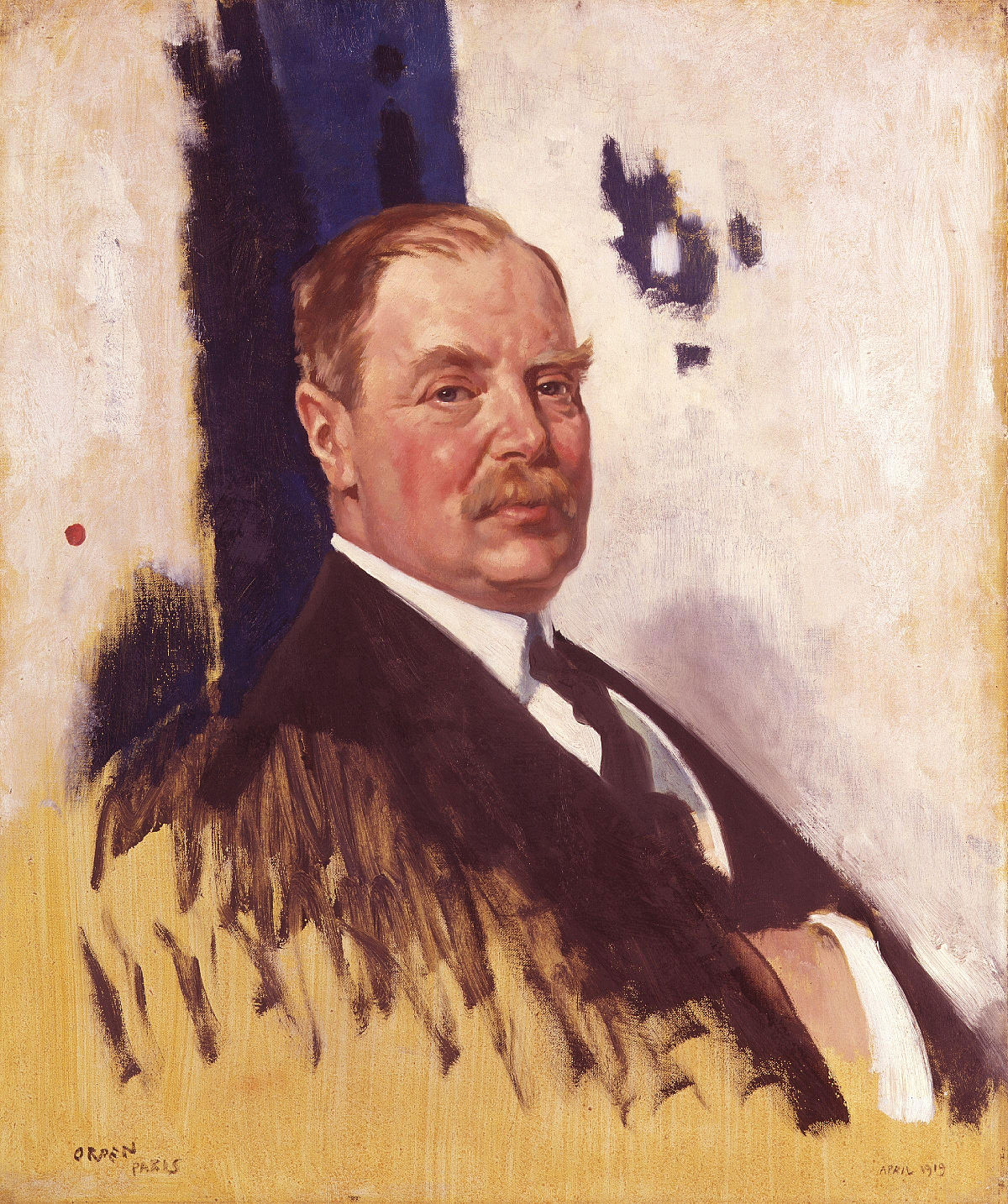
Lord Derby by William Orpen – (c) National Portrait Gallery: NPG 4185

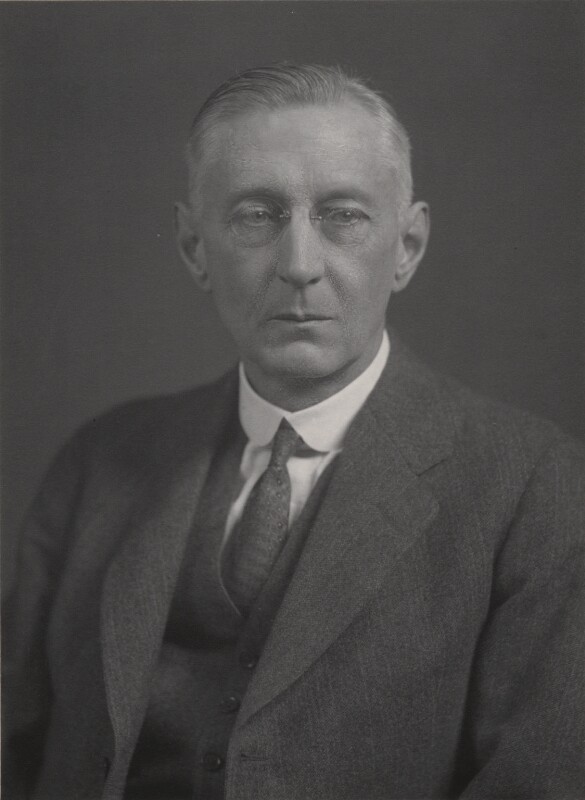
Edward George Villiers Stanley, the 17th Earl of Derby was a great supporter of Wellington College both as an OW and as its Vice-President from 1908 to 1941, like his father the 16th Earl before him, who was Chairman of Governors from 1901-07, and the 14th Earl before him who was a founding Governor, and both of whom were also masons.

He was the Founding IPM of the Lodge and President of the PSLC Festival hosted by the Old Wellingtonian Lodge in 1922.

It is the 17th Earl’s portrait which is connected to the Stanley, one of the houses at Wellington, notwithstanding the fact that the house is actually named after this grandfather, the 14th Earl.

Stanley joined the Grenadier Guards in 1885 after leaving Wellington and served as private secretary to future fellow Lodge member Lord Roberts during the Boer War. He was ADC to the Governor-General of Canada in 1905. Outside his military roles he sat in the House of Commons from 1892 as the member for Westhoughton, and became Secretary of State for War between 1916 and 1918. He became our ambassador in Paris in 1918.

His private and semi-private roles at Wellington were as important. He was known to meet individual boys’ financial needs from his private income. Reflecting his understanding of the public and ever the politician, the boys particularly enjoyed his request for a holiday to celebrate the victory of his horse Sansovino in the Derby, a race named after the 12th Earl.

He was the benefactor of the ‘Derby Field’ at Wellington College, still home to house and school matches today. He acquired what was then a polo field from the proprietor of the Wellington Hotel (a member of Wellesley Lodge well known the Brethren at the time). The 22 acres cost £5,000 (or the equivalent of £150,000 in 2010), which was part funded by £1,000 from Lord Derby and a further interest free £3,500 loan. It was Lodge Founder Dighton Pollock’s posthumous bequest that saw the creation of the eponymous bridge over the railway connecting College to its new playing fields.

Derby Field was not his only scholastic bequest; he also gave 3 acres of land to help build the Bury Grammar Schools (both Boys and Girls Schools) in 1906.

The Earl was initiated into Studholme Lodge No 1591 (Now United Studholme Alliance Lodge No 1591), the lodge to which he introduced Winston Churchill, his fellow Tory ‘Hooligan’, as the grouping of young MPs was known. He was a member of at least six other lodges, and was a founder of both the OW Lodge and its mother lodge, Household Brigade.

On 3 November 1899, when still just Lord Stanley MP, he was installed as Provincial Grand Master of Lancashire (Eastern Division) in the Free Trade Hall, Manchester. Lord Derby presided over the Province for 49 years until 1948, during which time the number of lodges increased from 113 to 303 and the number of members from 4,829 to 19,000. He was made Senior Grand Warden in 1949, and was 2nd Grand Principal of the Royal Arch from 1951 to 1959.

H H F Pidcock Henzell

Major Henry Henzell Fraser Pidcock-Henzell JP, the Founding Junior Warden, was born in 1849, the eldest son of Henry Pidcock, of Oakfield, near Worcester, and went to Wellington in 1863. He was in the Hill.

He was a career infantry officer who served with the 63rd (West Suffolk), 103rd (Royal Bombay Fusiliers), 19th Princess of Wales’ Own Yorkshire (the Green Howards) and the Middlesex Regiments between 1869 and 1886, largely in India.

He was also sometime church warden at St Peter’s Farnborough and a Justice of the Peace, like his father.

He was initiated in to Tenby Lodge No 1177 in West Wales and later joined Farnborough and North Camp Lodge No 2203.

W Sanger

Courtesy of Wellington College Archive

Installed in November 1917, William Sanger CB was the last  Deputy Master of the Lodge during the Great War.

The Founding Treasurer of the Lodge and another member of Apollo Lodge No 357, Sanger had gone to Wellington in 1886, to the Hardinge, the same year as fellow founders Freeling Lawrence and William Bayne Powell. He was capped in the XV before winning an exhibition to Corpus Christi College, Oxford, where he rowed for the College VIII and was initiated into freemasonry.

On coming down he became a member of the Indian Civil Service, one of the ‘Heaven Born’. He would also work at the Ministry of Pensions and was a masonic historian, writing a short history of Burton Court Lodge No 3864.

He was a Grand Junior Deacon, and joined Royal Naval College and United Service Lodge No 1593. As well as serving as the Lodge’s Treasurer, he went on to be DC, holding both roles for six years.

R A Edgell

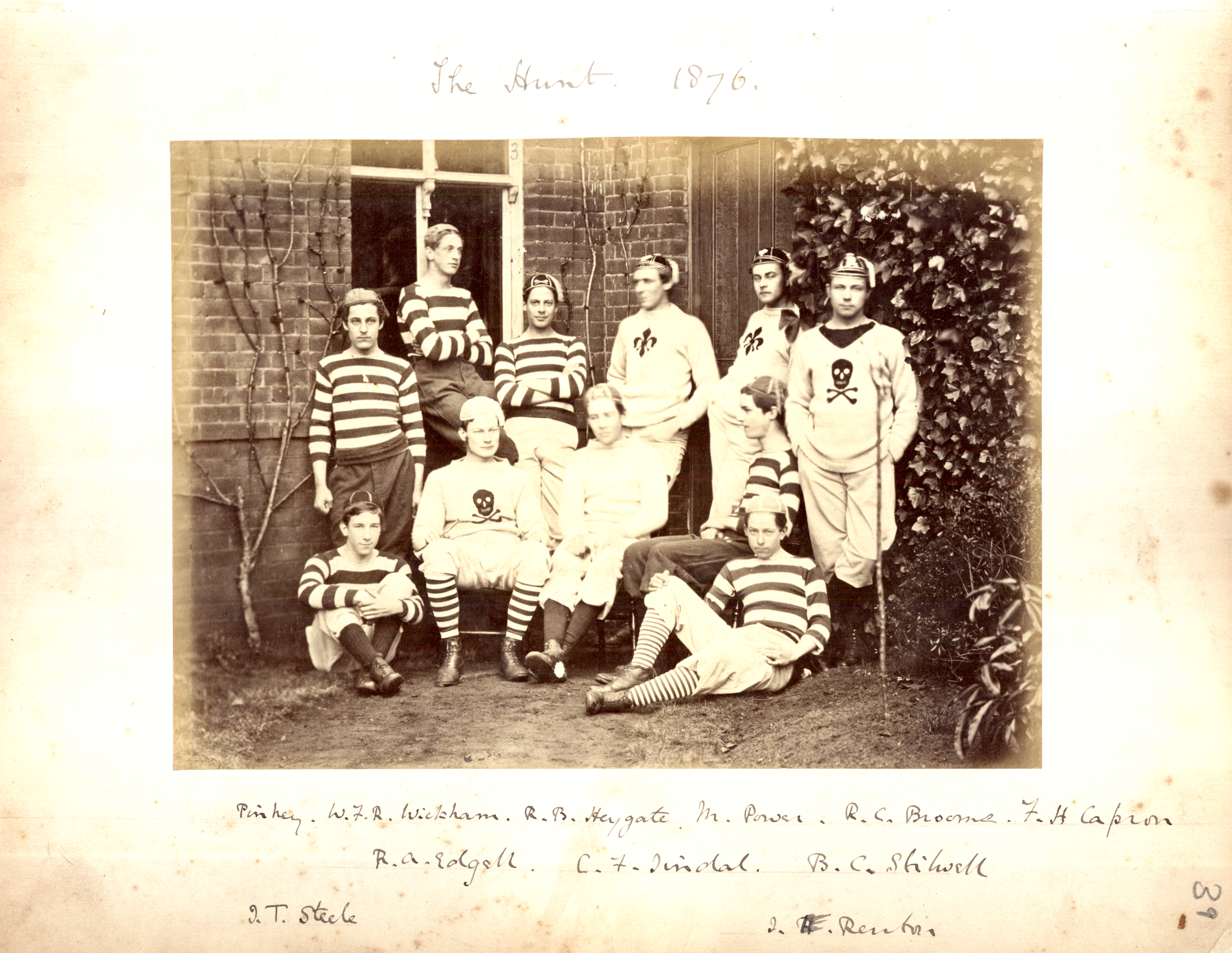
Gentlemen of the Hunt 1976. R A Edgell (seated on the left hand side) Courtesy of Wellington College Archive

The Reverend Richard Arnold Edgell MA was the Founding Chaplain of the Lodge and Worshipful Deputy Master in 1919.

He was born in India and survived the Siege of Lucknow as a child before being sent back to Wellington in 1870, and was in the Hill. He was a member of the hunt along with future fellow Lodge member the Revd Manley Power (shown standing forth from the left in the above photograph). He was another of the eleven brethren of the Lodge over the years to be Head of College, this time in 1875.

After leaving Wellington he went up to Univ, where he did “passably well” in maths and classics before hitting his stride and taking a first in Natural Sciences. He went down to Westminster to teach and in 1892 took holy orders. He was the first Housemaster of Ashburnham from 1883 0 1893. He continued teaching, becoming headmaster of Leamington College in 18931 and Sywell House School in Llandudno, before departing academia and moving to Beckley in Sussex as rector, where he managed to combine his pastoral activities with his passion for golf.  He was also a keen cricketer, but the records of the Masters and Boys match at Westminster suggest that enthusiasm rather than ability was the driver here. He batted 11th and was out for 1. He did not bowl…

He was initiated into and was a past master of the White Horse of Kent Lodge No 1506. As a school master and later vicar, like his military brethren, his masonry was at the beck and call of his schools and parishes. Kent provided him with his mother lodge, the White Horse of Kent Lodge, and this survived his Westminster teaching days, but when he moved to Leamington and Llandudno it proved to be too far to travel so he joined Shakespeare Lodge No 284 in Leamington and then St Trillo Lodge No 2569 in Wales. He was also a Past Provincial Grand Chaplain in Warwickshire.

He was married in quite some ceremony in April 1888 in Westminster Abbey to Diana, the daughter of Surgeon-General Sir Joseph Frayer Bart.

_____________________

  1. https://elizabethan.westminster.org.uk/Filename.ashx?tableName=ta_elizabethan&columnName=filename&recordId=170 

Sir William M Graham-Harrison KCB KC

Sir William Montagu Graham-Harrison, by Walter Stoneman, 1930 - NPG x167917 - © National Portrait Gallery, London

© National Portrait Gallery, London

Sir William Montagu Graham Harrison KCB KC was a Founding Steward of the Lodge and installed as Worshipful Deputy Master in November 1925.

‘G-H’ was a barrister and civil servant who had a distinguished and far reaching career at the Bar and as a parliamentary draftsman and legal adviser to the Home Office.

After leaving Wellington and the Orange, Graham-Harrison went up to Magdalen College Oxford. He was called to the bar at Lincoln’s Inn in 1897, and appointed solicitor to HM Customs and Excise in 1913, where amongst other things he was responsible for drafting the ‘Trading with the Enemy Act of 1914’, known in hindsight as a particularly tough piece of legislation.

His move to the heart of Government followed in 1917 with his appointment as Second Parliamentary Counsel, and as First Parliamentary Counsel in 1928, holding the post until his retirement in 1933.

He took silk in 1930 and was appointed Chancellor of the Diocese of Durham in 1934, the Diocese of Truro in 1935, the Diocese of Gloucester in 1937, and the Diocese of Portsmouth in 1938. He retired from all except Gloucester in 1940, which he retained until his death in 1949.

Graham-Harrison was appointed a Companion of the Order of the Bath in the 1920 New Year Honours and Knight Commander of the Order of the Bath (known affectionately as the ‘deep end’) in the 1926 Birthday Honours.

He did not forgo his connections with academia, being elected a Fellow of All Souls College and being awarded an Oxford DCL for a thesis which according to Sir Cecil Carr “went far to lay down a foundation for the study of administrative law in England.” Carr went on to say that “He discharged his intricate and important duties as Parliamentary Counsel with widely acknowledged distinction.”[1]

Graham Harrison had been initiated into Friendship & Harmony Lodge No 1616, and was made Assistant Grand Registrar and later a Grand Deacon.


[1] Dictionary of National Biography 1941- 50 (1959), pp. 314-15, by Sir Cecil Carr